


|
|
|
|
|
|
|
| |
| 17-Mar-2021 | |
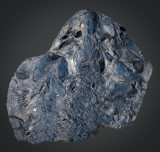
This is an exceptional specimen of this giant tetrapodomorph fish. Other similarly large specimens were recovered in the 19th century.
Collected by David Walker Barker in July 1974 and responsible for damage to the suspension of a vehicle at the time! I had also collected one of these giant Carboniferous fish in the 1970s, from Elland Brickpit (but donated it to the Ludlow Museum) and we would compare notes on our collecting trips in the northern Carboniferous.
In addition to his passion for geology, David was a remarkable artist. Read more here https://land2.leeds.ac.uk/people/walker-barker/ and here https://www.lancaster.ac.uk/the-ruskin/exhibitions/david-walker-barker/ .
The bone structure of the skull in this dorsal view is clearly seen, including parietals, postorbitals, post-parietals, extrascapulars and operculars. There is also a spectacular view of the bones in the pectoral lobe-fin at left, homologous to those in the limbs of tetrapods. Note the large radius with robust and shorter ulna behind (below in the image). Two carpals, (intermedium and ulnare, the equivalent of our wrist bones) extend from the ulna.
The scale of this osteolepiform rhipidistian fish is spectacular in comparison with the familiar Devonian Osteolepis. In life, this fish would have been 1.5 m or more in length, judging by the skull-to-body proportions of the complete 1883 specimen held by Leeds Museum (Miall 1885). That specimen is unfortunately now incomplete, missing a large segment of body.
Copyright Ru Smith